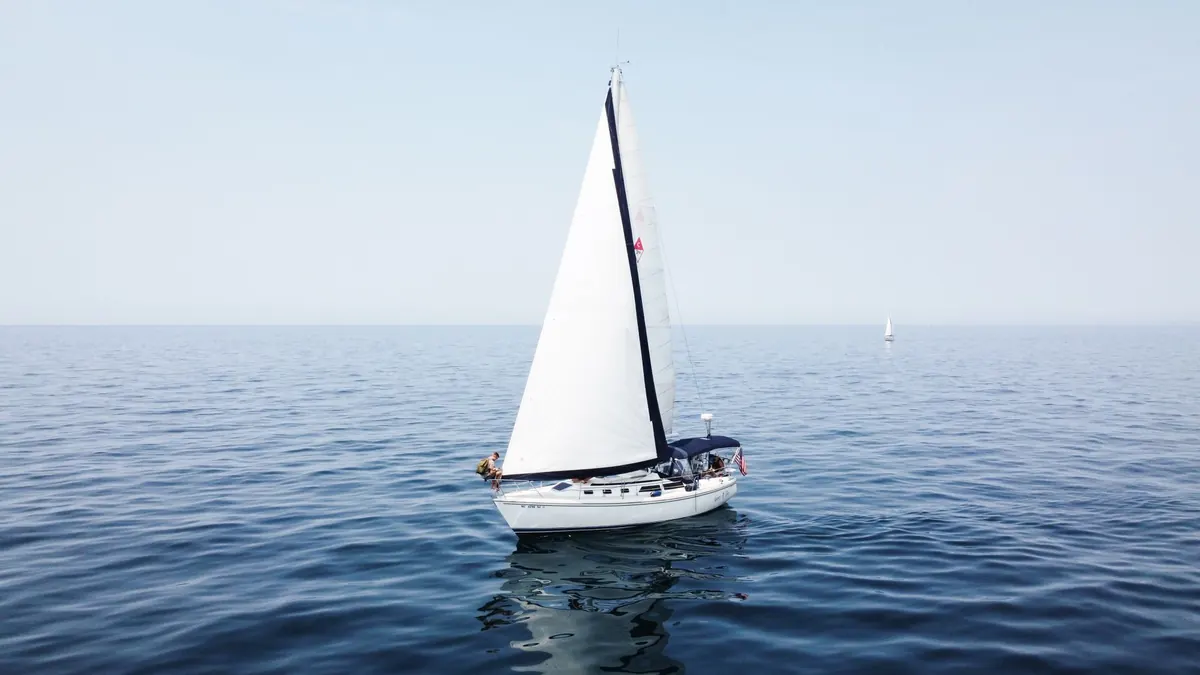
You do not need a yacht, a sailing family or a wardrobe full of technical clothing to get afloat on the Kent coast. You need a few spare weekends, a club that welcomes beginners, and a willingness to get wet in public. Kent's sailing is spread across three very different stretches of water — the shallow estuary off Whitstable, the deep tidal harbour at Ramsgate, and the working port at Dover — and each one suits a different kind of beginner.
Three coasts, three ways in
Whitstable: dinghies, mud and a serious tide
Sailing here happens off shingle beaches and in the creeks and channels of the Swale and Thames estuary. Whitstable Yacht Club and Tankerton Bay Sailing Club are the two names to know, and both have long histories of dinghy racing and cadet training. The water is shallow in places, the tide moves a long way out, and it runs hard when it turns. That sounds intimidating; in practice it makes Whitstable a good place to learn quickly, because you cannot sail here for long without understanding tide tables and wind direction.
Suits: anyone who wants to be on the water within a fortnight of their first lesson, and families with children old enough for cadet sessions.
Ramsgate: harbour sailing and bigger boats
Ramsgate's Royal Harbour is sheltered, with pontoons, a marina and somewhere to get a coffee while you rig. Ramsgate Yacht Club and the Royal Temple Yacht Club both sit at the heart of the local scene, and there is a steady flow of keelboat and yacht training alongside the dinghy work. The tidal range is large and the ebb can push you along smartly, which is worth knowing before you head out. The Goodwin Sands lie offshore — not somewhere to drift into while you admire the view.
Suits: people who fancy trying keelboats or yacht sailing, or who prefer the reassurance of a harbour wall.
Dover: structured courses in busy water
Dover Sea Sports Centre on the seafront is the obvious starting point, running RYA dinghy and powerboat courses with kit provided. Dover is a working port, with ferries and cross-Channel traffic, so this is not a spot for casual pottering; you sail where the centre and the harbour authority tell you to. That structure is exactly why it works well for a first course.
Suits: anyone who wants a formal course with everything supplied, and those curious about powerboating too.
What RYA courses actually give you
The Royal Yachting Association is the national governing body, and its training scheme is the standard route into the sport. The syllabus is the same nationwide, so a certificate earned in Kent means the same as one earned in Cornwall.
- Taster session. An hour or two on the water with an instructor. Cheap, low commitment, and it tells you whether you actually like being cold and wet.
- Level 1 — Start Sailing. Usually a day or a weekend. You learn what the parts of the boat are called and how not to fall in.
- Level 2 — Basic Skills. The course that makes you genuinely useful: rigging, launching, tacking, gybing, capsize drill and getting back to shore in one piece.
- Level 3, Seamanship Skills or Start Racing. For when you want to keep going rather than tick a box.
- Bigger boats. Competent Crew, then Day Skipper, usually with a shorebased theory course alongside it.
When comparing centres, ask what is included. A higher fee that covers boat hire, wetsuit and buoyancy aid is often better value than a cheap course where you turn up in your own kit.
What club membership buys you
Clubs are not only for racers, though racing is the quickest way to improve. Membership typically brings access to club boats, cadet and youth sessions, organised social sails, safety boat cover, and a bar where you will overhear more useful advice in an hour than in a week of reading. It also brings people who need crew.
Two practical tips. First, ask about a "crew wanted" board or a Facebook group — turning up on a Wednesday evening as willing ballast is how most people get their first regular sailing. Second, volunteer. Helping with the safety boat, the galley or the junior section is the fastest way to become a known face rather than a new name on a form.
What it costs, honestly
Prices move, and they vary a lot by club and centre, so treat the following as shape rather than gospel and ask for current rates.
- Courses. A two-day RYA dinghy course generally runs into the low hundreds of pounds per person. Keelboat and yacht courses cost more, particularly residential ones.
- Club membership. Often a few hundred pounds a year for a family. Many clubs offer a reduced introductory, winter or social membership — ideal for a first season.
- Kit. Modest if you buy secondhand, much less if you borrow from the centre during your course.
- Boat ownership. The expensive part is not the boat. It is mooring or storage, insurance, maintenance and replacement sails. Borrow before you buy.
Ways to cut the bill: taster sessions before courses, club boat hire instead of ownership, cadet schemes for children, and crewing for someone else, which usually costs no more than a round of drinks.
Kit: buy the safety, borrow the rest
For a first course, hire what the centre offers. The one item worth buying early is a properly fitted buoyancy aid — ask staff to check the fit rather than guessing from a size label. After that, most beginners build up slowly:
- Wetsuit or drysuit suited to cold water, plus a spray top
- Sailing gloves and wetsuit boots
- A warm hat and sunscreen, often needed on the same day
- A dry bag with a full change of clothes, left ashore
Wetsuit and chandlery sales, club noticeboards and online marketplaces do a brisk trade in barely used gear from people who tried the sport once.
Weather, tides and a word on safety
Check the forecast and the tide tables before every session, and tell someone ashore where you are going and when you expect to be back. Beginners should not sail alone. The Kent coast stays cold well into spring, so capsize practice belongs in a supervised session with people watching, not on your own in April. If you have a medical condition that cold water or exertion might affect, take advice from a GP before committing to a course.
Getting started this season
Pick your stretch of coast. Book a taster session at the nearest centre or club and use it to ask questions: what courses run next, what is included, what membership costs, whether there is a waiting list for cadets. Then book Level 1 and 2 close together so the skills stick, and get on the water as often as you can afterwards. Frequency matters far more than talent in the first year.
Sailing rewards people who simply turn up. The first season is mostly about being cold, misreading the tide once, and then finding yourself one afternoon a few hundred metres offshore, quietly realising you sailed somewhere and back without thinking about it.
Photo: David Solce / Pexels