Ask three Kent commuters how they get to London and you will get three firm, well-argued answers. The train-versus-car decision rarely comes down to one number. It is the sum of fare, door-to-door time, parking, and how much you value sitting down with a laptop instead of gripping a steering wheel on the A20.
Ashford, Maidstone and Sevenoaks each sit in a different position: one has a genuine high-speed link, one has a fragmented station set-up that depends entirely on your postcode, and one has frequency and a choice of London terminals. Here is how the four practical questions play out.
What the trains actually offer
Ashford
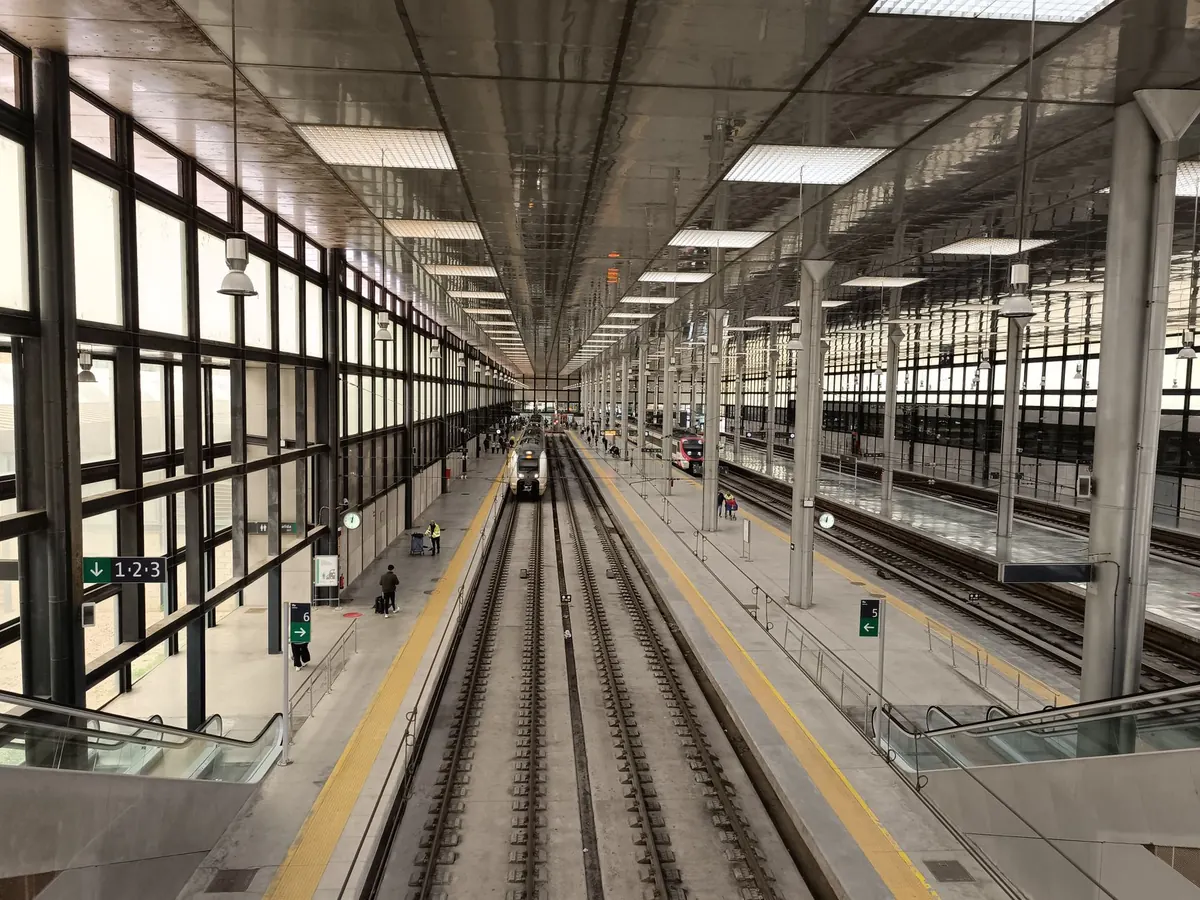
Ashford International is the strongest rail proposition of the three. High-speed services run to St Pancras International with stops at Ebbsfleet and Stratford, and the quickest journeys land well inside an hour. Stratford matters more than people realise — it puts you on the Jubilee, Central, Elizabeth and DLR lines without crossing central London at all.
The classic line via Tonbridge to Charing Cross, Waterloo East and London Bridge is slower but usually cheaper, and it is the better bet if your office is in the City or south of the river.
Maidstone
Maidstone is the awkward one. The town has Maidstone East, Maidstone West and Maidstone Barracks rather than a single obvious station, so what you get depends on which side of town you live. Maidstone East runs to Victoria and Blackfriars; Maidstone West offers a high-speed route into St Pancras via Strood. Both take roughly an hour on a decent day.
Sevenoaks
Sevenoaks is the frequency play. Trains run often to London Bridge, Waterloo East, Charing Cross and Cannon Street, and Thameslink services give a direct route to Blackfriars and the City Thameslink stations. London Bridge in around half an hour makes it the most forgiving of the three if you miss a train.
Cost: work out the real monthly figure
Fares change every year, so check current prices with the operator before deciding — but the shape of the comparison stays the same. On the rail side, the season ticket is the dominant cost, and high-speed routes carry a premium. On the car side, people routinely underestimate the total by counting only fuel.
Add these up before you commit:
- Season ticket, monthly or annual — the annual usually costs less per month
- Fuel or charging for the round trip
- Station car park season permit, or daily parking if you cannot get one
- Congestion Charge and ULEZ if you drive into central London — check current rules and rates with TfL
- Servicing, tyres, insurance and depreciation spread across the extra miles
- Incidentals: the coffee, the late taxi, the upgrade to first class when you are desperate
One honest point: if you would keep a car anyway, the fair comparison is the marginal cost of commuting by car — fuel, parking and charges — not the whole cost of ownership. That narrows the gap considerably, especially for anyone who can share lifts or park free at work.
Journey time is a door-to-door question
Station-to-station times flatter the train. From a Sevenoaks front door to a desk in the City, you are adding the drive or walk to the station, the wait, the walk to the Tube and the Tube itself. From an Ashford driveway, High Speed 1 is quick, but only if you have allowed for parking and the walk to the platform.
The car looks better on paper and worse in practice at peak times. A single incident near the Blackwall Tunnel or the Dartford Crossing can add half an hour without warning. Driving from Sevenoaks into central London at 8am is rarely a rational choice; driving from Maidstone to a job with on-site parking and a 7am start often is.
Whatever you decide, do a trial run at the exact times you would travel, not on a quiet Friday. Tuesday to Thursday is generally the heaviest traffic of the week, and term dates change everything.
Reliability: two different kinds of bad day
Rail problems arrive in clusters: industrial action, weekend engineering work, signal failures, and delays that ripple through an entire evening. When it goes wrong you can be stuck on a platform with thousands of others, though delay repay schemes and the next service soften the blow.
Road problems are more random, but you have more control. You can reroute, leave earlier, or work from home if the signs look bad. What you cannot do in a car is work, sleep or read — and that is the real argument for the train. Two hours of unusable commute time a day is a different kind of cost from a slightly higher fare.
Worth knowing: Kent's roads are also affected by cross-Channel freight disruption, which can queue lorries back along the M20 when the ports are busy. It does not happen every week, but it happens.
Parking, the quiet decider
Car parks at Ashford, Sevenoaks and the Maidstone stations fill early, many of them well before the main morning peak. Season permits often carry waiting lists, and daily charges add up fast across five days a week.
If you drive, plan where the car sits all day. Central London parking is expensive enough to make the train look cheap, so most drivers park at a station or a Tube railhead outside the centre and switch. That only works if the car park is reliable and the interchange is quick.
Which one fits your week?
Broadly:
- Rail suits five-day weeks, office jobs in zones 1-2, people who can work on a laptop, and anyone whose employer offers a season ticket loan.
- Car suits hybrid weeks with two or three office days, jobs with on-site parking, early or off-peak starts, and anyone juggling school runs or care commitments.
- Mixing suits more people than will admit it — rail for the Tuesday-to-Thursday core, car for the edges of the week. Flexible and part-time season products make that cheaper than a full annual.
Before you commit, test it for a week
- Do the actual journey at the actual time, twice, on different days.
- Time it from your front door to your desk, not station to station.
- Check the current season ticket price against your monthly fuel-and-parking estimate.
- Ask about parking permits at your station and check waiting lists before assuming you can get one.
- Read the small print on delay repay and flexible season products.
- Ask whether your employer offers a season ticket loan or a parking space. That often settles the question on its own.
The commute you can sustain is the one that survives a bad week. Pick the option that still works when the trains are up the wall or the M20 is at a standstill, then budget for it properly, including the annual fare rise each January. If the numbers are tight, a chat with an independent financial adviser is worth more than guesswork about what you can afford.